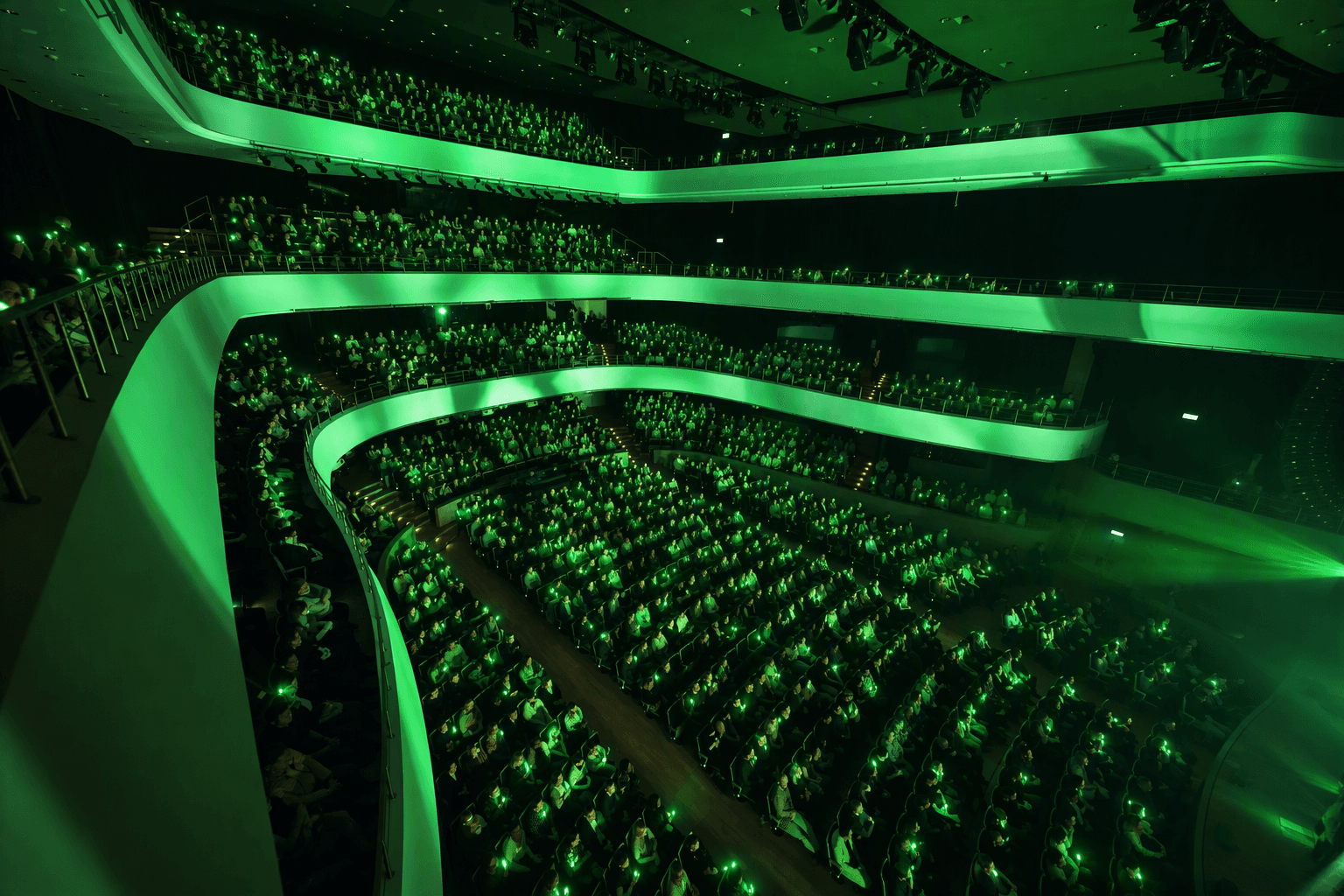
Concert hall in red light, seen from above over the balconies and audience

Blog

…and not just about sound

  1. 20 years since the first concert

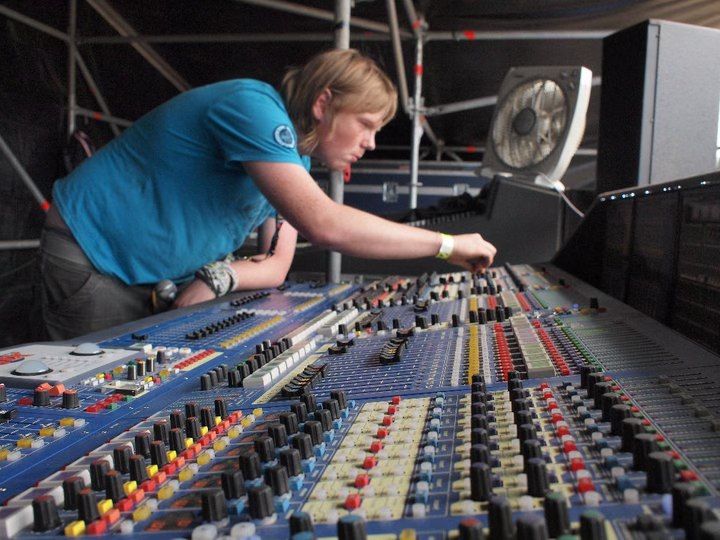
    Patryk Tylza behind a large console on the Przystanek Woodstock stage

    I almost forgot that it’s today!!!

    On September 25, 2005, I realized my first “commercial” (i.e. for money) concert.

    From the perspective of time, I see what great luck it was to take my first professional steps in the “Best Polish jazz club” as the Warsaw Tygmont was then titled.

    The opportunity to interact daily with greats of the jazz world like Wojciech Karolak, Zbigniew Namysłowski, Zbigniew Wegehaupt, Tomasz Szukalski, Jan Ptaszyn - Wróblewski (to mention just a few) under the eye of invaluable mentors and colleagues Jan Jakub Mularzuk and Daniel Banan Szyba (and outside the club also Andrzej Starzyk aka. Looptrotter and Andrzej Jawor) was a huge privilege and excellent vocational school.

    It’s enough to say that just 5 years later I had the pleasure of standing behind the console on the large stage of Przystanek Woodstock - one of the largest festivals in the world - this event was documented in the attached photo :P

    Thank you for these 20 years. I thank myself for perseverance, I thank my mentors and older colleagues for showing the way and a vast amount of knowledge, I thank the Artists for their trust, I thank all of you I’ve met on this path!

  2. Live Mix vs Studio: Armored Transporter and Ferrari

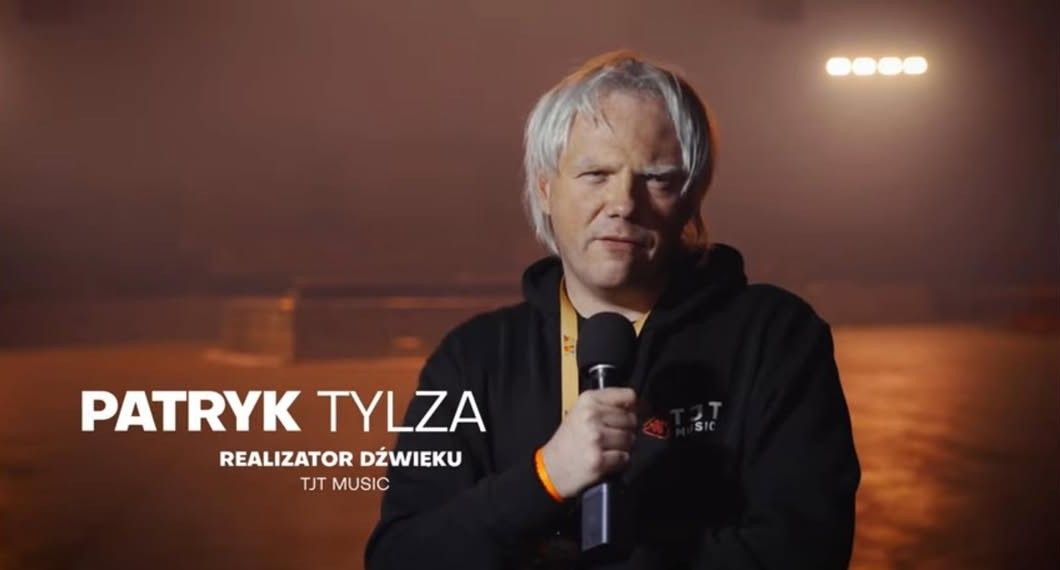
    Patryk Tylza, TJT Music sound engineer, in a video interview against the backdrop of a concert hall

    Staying on the topic of the impact of individual elements on the audio path sound:

    Live mixing compared to studio work is like driving an armored transporter vs driving a Ferrari - both are very expensive and difficult to master, but each has its unique challenges and requires completely different decisions.

    Live and studio mixing, however, also have a lot in common (just like Ferrari and an armored transporter): the laws of physics they utilize and the basic goal they serve.

    In both cases, rules such as the “weakest link” (the entire path is only as good as its weakest link) or the “cumulative effect” (differences/losses negligible for a single source accumulate when many sources are subjected to the same process) apply.

    When preparing for a tour - large or small - I try to take care of every element of the path, starting with the most important one: the source.

    My work doesn’t start at the soundcheck, but many months earlier in the rehearsal room, where together with the Artists, we work on making the arrangements not only attractive and interesting, but also well-mixing in concert conditions. We look for sounds, choose microphones, arrange the mix, listen….

    In this process, over the years, I have often had the feeling that part of this work is like “blood in the sand”. Acoustically terrible venues, poorly chosen, poorly prepared or malfunctioning sound systems, mixers that didn’t behave as I would have liked… not always can I avoid all these factors, but I’ve learned to eliminate as many of them as I can, at all costs.

    The acoustic conditions of concert venues are a topic not for a post, but for a book, and I won’t start another discussion about systems, but what about consoles?

    Digital technology, although it has opened up previously unknown possibilities in terms of concert preparation and pre-production, although it is a salvation for our spines, although it has allowed us to take many tools directly from the studio on tour, achieving previously unattainable results, is also (in live consoles) essentially almost always a powerful compromise.

    Manufacturers have to navigate between the quality of algorithms, computing power, and latency. Between the quality of IO modules (especially converters, clocks) and the number of inputs/outputs, and the price and profitability for the customer. Fortunately, however, in 2025, we really have a lot to choose from.

    There are consoles that are almost ridiculously cheap with considerable capabilities and sufficient quality for many applications. There are those that make up for savings on processing quality with a ton of possibilities and nearly unlimited processing power. There are also expensive and uncompromisingly high-quality products, each with a slightly different set of features and functions. I dare to say that each of them (even the cheap one) can be a brilliant tool, if only chosen consciously and adequately for the application.

    Do live consoles differ in sound? Definitely yes. Are these differences audible and measurable? Absolutely. And how significant are they for the final effect? That depends on a great many factors, not just (and usually the least) the objective ones. However, it’s worth remembering one thing: from a certain level, it’s no longer a matter of better or worse (because what’s better, a Gibson Les Paul or a Fender Telecaster? Well, exactly, IT DEPENDS) but DIFFERENT.

    I talk about why I chose the Solid State Logic (SSL) L350+ console for Kwiatu Jabłoni’s arena tour (thank you very much to Commercial Audio for ENORMOUS support) in a video, the link to which is in the comments!

    Greetings from the EU tour… the last one this year! :)

  3. New York: spatial sound and Broadway

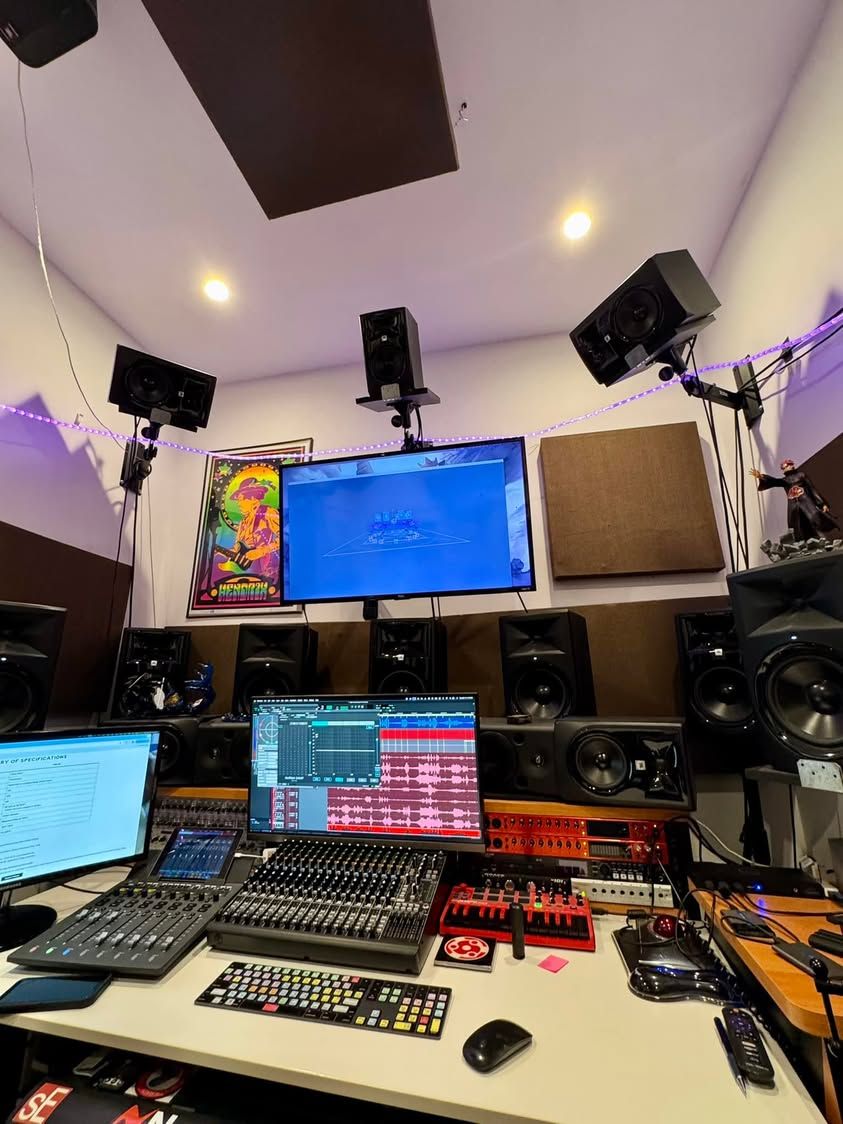
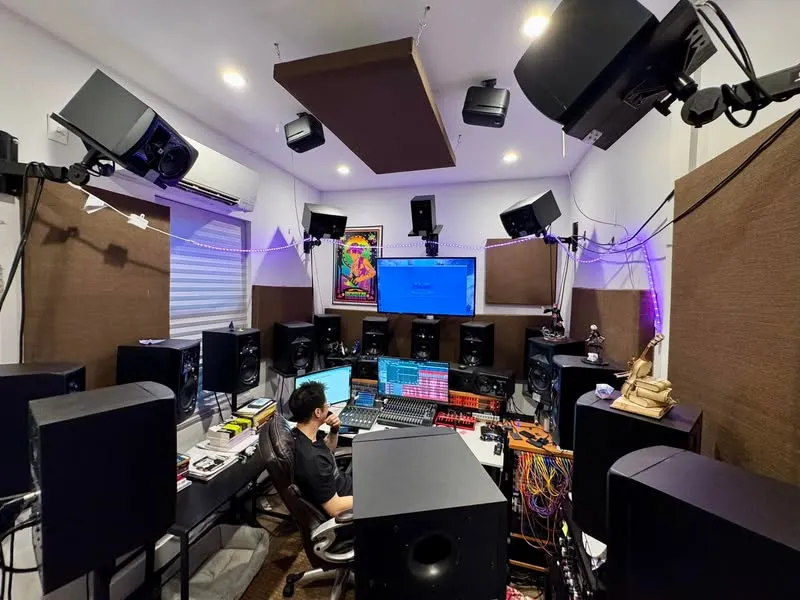
    David Quang-Minh Nguyen's spatial sound studio: mixing position surrounded by speakers

    Yesterday was a source of so many impressions that, as a classic once said, “the guy is in shock”. It started with a conversation about a very exciting collaboration, the effects of which you will see soon, and a little later…

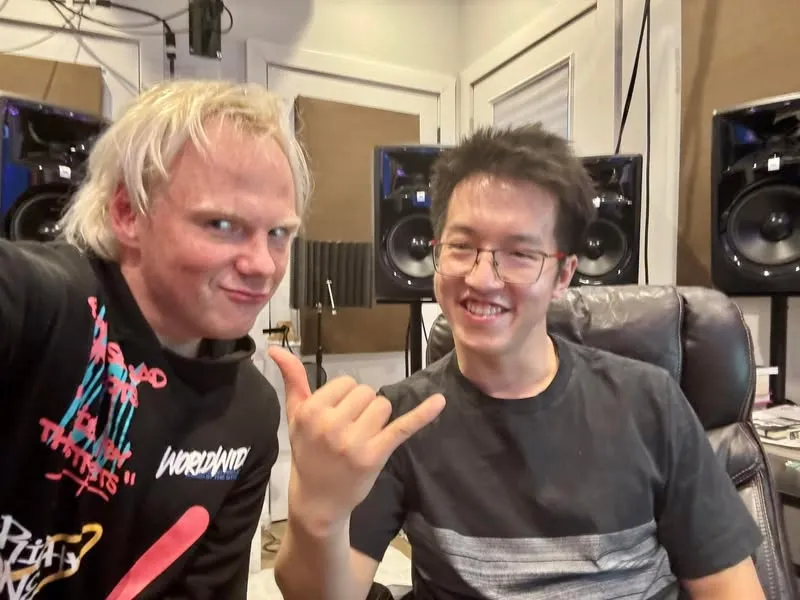
    I had the opportunity to visit an absolutely amazing place! The private studio of composer, mix engineer and spatial audio technology lecturer David Quang-Minh Nguyen. David composed so-called acousmatic music before Dolby Atmos was even a topic - the discussion with him on the use of acoustic space as a means of creative expression opened my mind to a completely new world of unexplored possibilities, and the tools David uses in his work gave me dozens of ideas, some of which will probably crystallize into several actual concepts. In short: what I heard and learned there blew my mind and inspired me to act.

    David Quang-Minh Nguyen’s studio with a speaker system for spatial audio

    Patryk Tylza and David Quang-Minh Nguyen in the studio

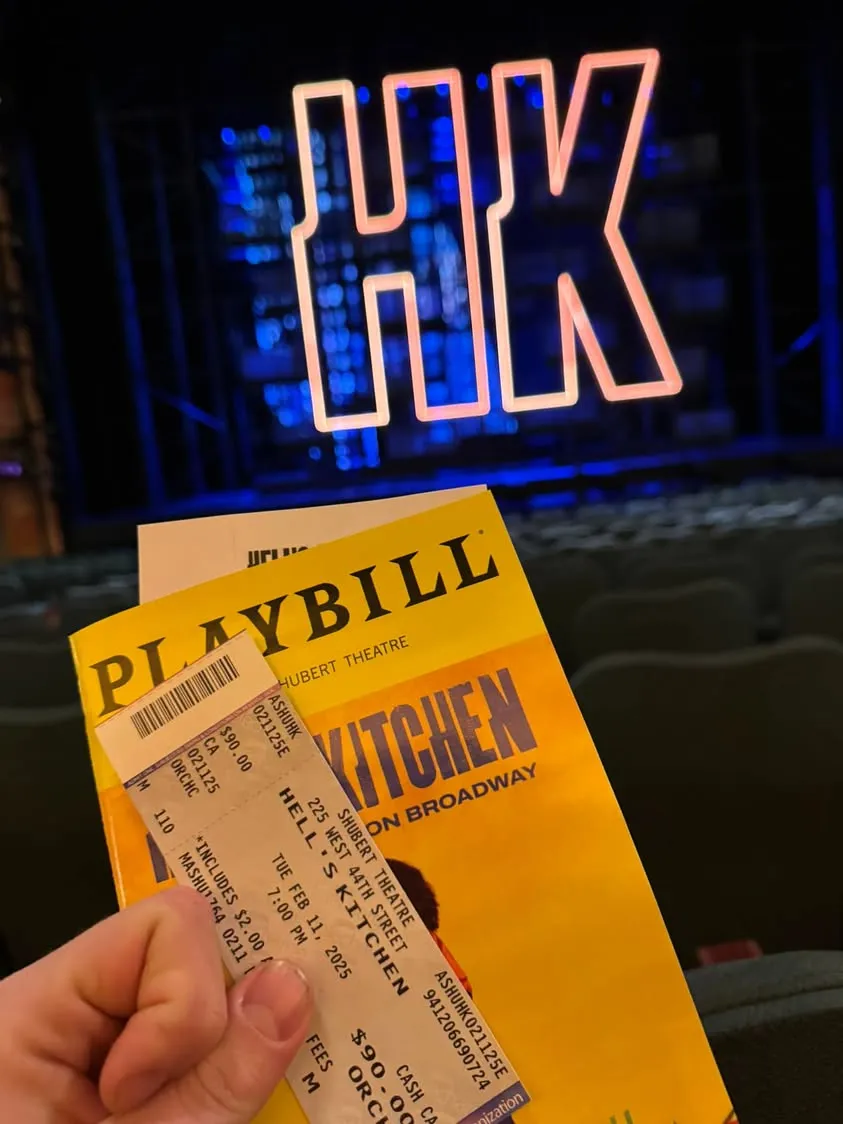
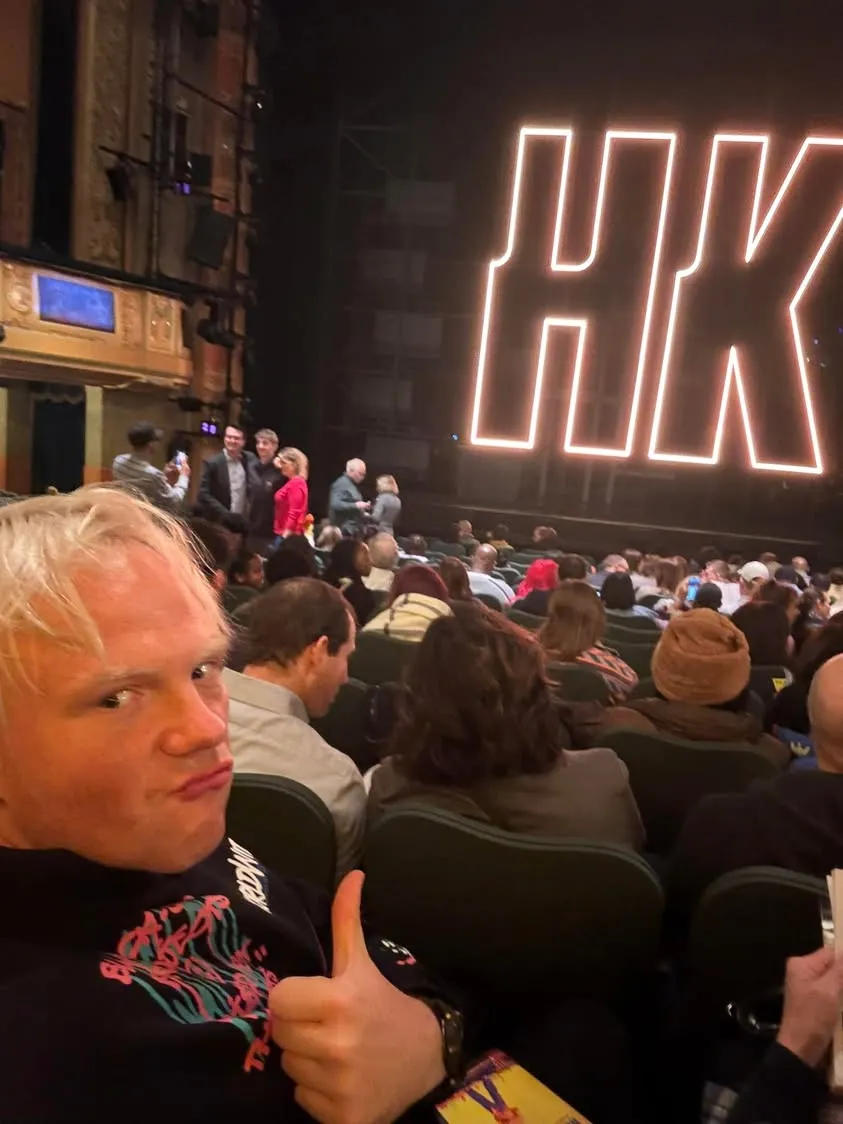
    For the second time, my grey matter was splattered on the walls of the Schubert Theater on Broadway in the evening, and that was due to exposure to the unequivocal musical superproduction that is Alicia Keys’s Hell’s Kitchen. It was out of this world in every respect: compositions, arrangements, lyrics, singing, dancing, acting, band, visuals, sound..

    I sat squeezed into my seat for 2.5 hours - 3/4 of the show with tears in my eyes, 1/4 simply crying. I recommend this experience to anyone who will have the opportunity to visit New York.

    Ticket and program of the Hell’s Kitchen musical at the Shubert Theatre

    The audience of the Shubert Theatre before the Hell’s Kitchen show

    Finally, a bittersweet reflection (it will be a bit “about the industry” but I think it applies to a broader range of issues): in Poland, in many respects, we have nothing to be ashamed of anymore. On the contrary, our brand-new infrastructure, top-notch technology - we didn’t even notice when we overtook those we still have complexes about…

    A musical on Broadway showed me, however, that it’s not about the conditions, because I’ve done both larger and smaller plays in similarly excellent technical conditions, but significantly better in terms of location. It’s also not about the money, because economically, something like this could be done in Poland without a problem - ticket prices are not prohibitive even for a Polish audience… So what’s it about? I don’t know.

    Certainly, to some extent, it’s about the willingness and approach - that famous letter “ć” in the word “jakość” (quality) which we so often lack… and what else? Maybe skills? If so, it’s not due to a lack of talents… Maybe it’s that talented people are not supported, and are often even suppressed and pushed into the ground in the name of various fears, often passed down from generation to generation? I don’t know. And I don’t know if I even want to know.

  4. Juwenalia in Lublin, or on concert loudness

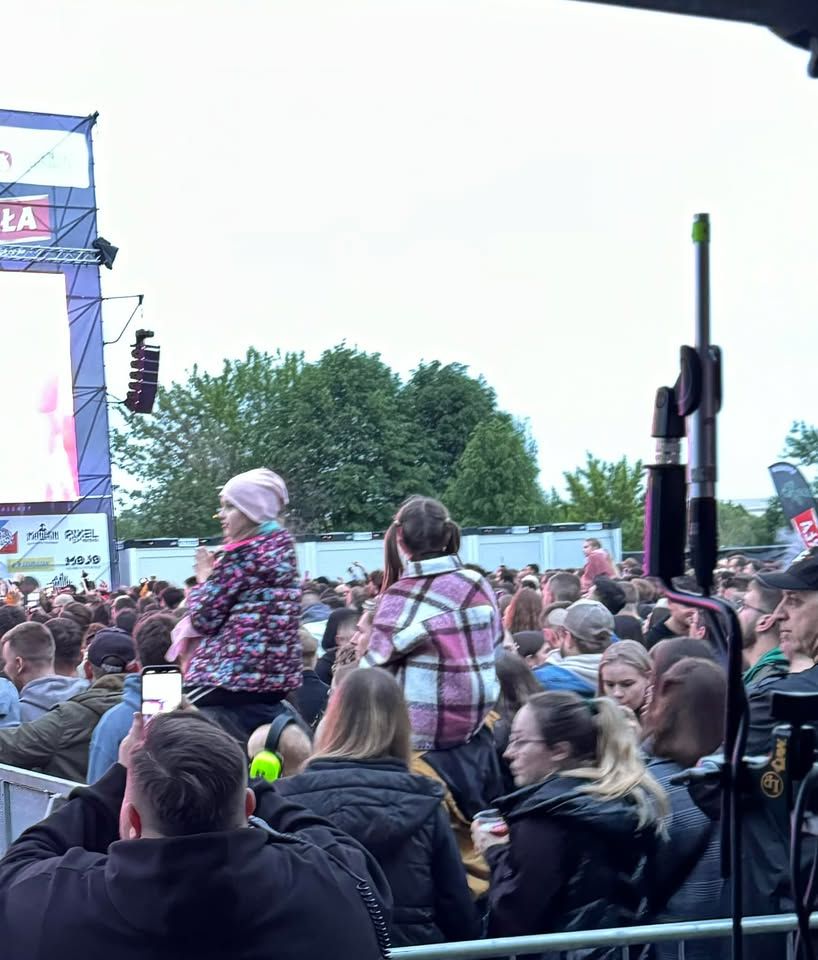
    Audience at Juwenalia in Lublin, children on parents' shoulders, one in protective earphones

    Juwenalia. Lublin. And today’s my challenge: to play such sound that this little girl with pigtails, whose very aware (respect!) parents bought her protective earplugs, could take them off and enjoy the concert without discomfort. As you can see, I succeeded. That’s my mission: to respect those for whom we do this. The audience. And with the Kwiat Jabłoni band, we have a very diverse audience, often very young as well. 90 or in bursts (2 songs in a set) 95 dB(A) at the FOH in an outdoor setting (i.e. usually 30-50m from the stage) is a completely sufficient sound level to fully experience our concert and have a good time. Those who enjoy kidney massage from subbass, please take seats in the first row, and I apologize sincerely to my fellow sound engineers, but this year I also won’t participate in the loudness races ;)